A landlord swapped a light switch himself. The inspector opened it up: the earth wire had been used as the switch wire
Other languages: 中文 · Tiếng Việt · العربية
December 2019, Carindale, on Brisbane's east side. A tenant reports a problem to the managing agent: one of the light switches is broken.
The next day the landlord turns up himself. He takes the wires off the old switch, connects them to a new one, and the light comes on. The tenant is watching. The landlord tells him: I'm not an electrician, but this switch is safe. The tenant still isn't comfortable, and the landlord says: it beats paying for an electrician. When the tenant pushes further, the landlord's answer is: well, you can sue me.
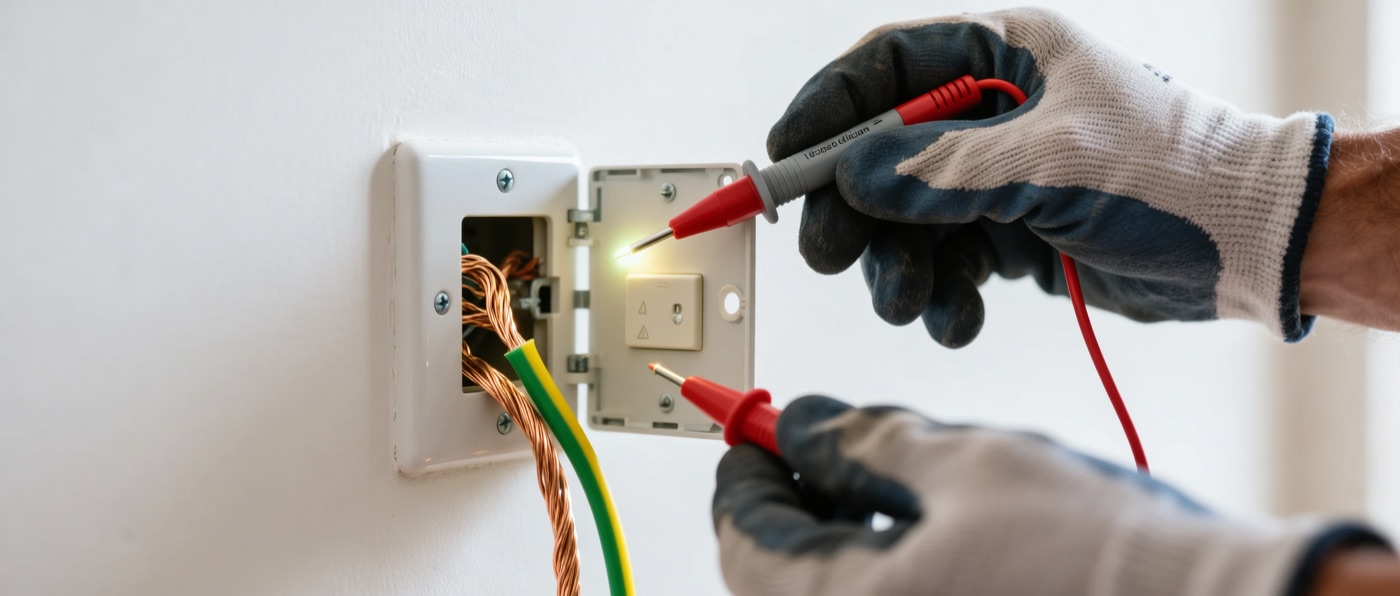
The tenant didn't sue him. But on 17 December an inspector from Queensland's Electrical Safety Office came to the property. Opening up the new switch, the inspector found that an earth conductor had been used as a switch wire. The inspector disconnected the circuit on the spot.
The matter ended up in court. The fine wasn't big: $400, plus $97.90 in court costs, and no conviction recorded.
The fine is the small part. What I want you to remember is something else: in Queensland, replacing a single switch counts as "electrical work", and it needs a licence.
The "line" from last time doesn't apply to electrical work
Last time we covered each state's licensing line: NSW $5,000, Queensland $3,300, Victoria $10,000. What a lot of people took away was: small jobs don't need a licence.
That's only half right. Electrical work runs on a different set of rules, and it has no line.
In the NSW Government's own words: you need an electrical licence or certificate before you do any electrical wiring work, regardless of the cost of the work, and whether it's residential, commercial or industrial.
Queensland is even more specific. The Electrical Safety Office lists what counts as electrical work: installing a new power point, replacing a light switch, swapping a batten holder for a new light fitting, repairing an appliance like a heater, moving a power point, replacing a light fitting with a ceiling fan, making an extension lead, even replacing the plug on the end of an extension lead.
So what can an owner actually do themselves? The NSW Government's "Electrical safety in the home" page gives a very blunt answer: unless you're a qualified electrician, don't carry out any electrical maintenance other than changing a light globe.
I call this "the light globe line": changing a globe is the last thing an owner can do themselves. One step past the globe, and it's an electrician's job.
Queensland has a heavier tier too: if the work exposes someone to a risk of death or serious injury, the maximum for an individual is $600,000, or five years in prison.
The fine is the small number. Insurance is the big one
The Carindale landlord was fined $400. If that wrongly connected earth wire had later started a fire, we'd be talking about a lot more than $400.
Both state governments say the same thing. The NSW Government says doing your own electrical work can void your insurance policy. Queensland's Electrical Safety Office says that if major fire damage was the result of illegal electrical work, your insurer may refuse the claim.
Look at it from the other side: Queensland sets hard insurance requirements for licensed electrical contractors — at least $5,000,000 in public liability insurance, including a $50,000 consumer protection component. Unlicensed workers and DIY jobs come with none of that protection.
What you save is one electrician's call-out. What you're betting is the insurance on the whole house.
Case two: they asked the right question, just too late
The second case is from this year. On 26 February 2026, the Gympie Magistrates Court in Queensland sentenced the manager of a solar installation company.
Some years earlier, a household at Lagoon Pocket, living rurally and not connected to the grid, wanted an off-grid solar system. This man came out to discuss it and sent them a quote for $15,576, covering the full package: panels, inverter, switchboard, lithium batteries.
After the installation, the owners paid in full. The system worked on and off. He came back a few times to fix it, and after April 2019 he never came back again.
This household did one thing right: once the system was in, they asked him to show certification from a licensed electrician that it was safe to use. They never got it, because he had never held an electrical licence.
In November 2022 they complained to the electrical safety inspectors. One of the charges he pleaded guilty to was this: he incorrectly installed two components that the applicable Australian Standards prohibit, creating a risk of death or serious injury to people or property. The final fine was $10,500, with no conviction recorded.
Notice what those two numbers mean side by side: the fine goes to the government, not back to the owners. The magistrate also noted the owners' victim impact statement, which described the financial loss and years of anxiety.
The question they asked was exactly the right one. They just asked it after paying in full.
Every piece of electrical work should come with a piece of paper
That question should be asked before you pay. And what you're asking for is a certificate. Each of the three states calls it something different, but it means the same thing: a licensed electrician has tested and signed off that the work is compliant and safe.
In NSW it's the CCEW (Certificate of Compliance for Electrical Work). Any work that installs, repairs, adds to or alters electrical equipment needs one, including like-for-like replacements — a new hot water system, oven, cooktop, switch or power point. The electrician must lodge it with the government within 7 days of finishing the work and testing. If they enter your email address when filling it in, the system sends you a copy automatically. The NSW Government adds one more rule: if a tenant engaged the electrician, the tenant must give a copy of the CCEW to the owner or the agent.
In Queensland it's a test certificate (a certificate of testing and safety, or a certificate of testing and compliance). The electrical contractor must give it to the customer as soon as possible after testing, and keep their own copy for 5 years.
In Victoria it's the COES (Certificate of Electrical Safety). For ordinary work like lights, power points, air conditioning and hot water, the electrician must give you a copy within 30 days. For "prescribed" work — main switchboard, meter box, solar, home batteries — an independent licensed inspector also has to inspect it, and you get the certificate within 4 days of that inspection.
In one sentence: a receipt proves you paid. Only a certificate proves the work is right.
Why it's so often us who reach for the screwdriver
First, back home, swapping a switch or putting up a light yourself is completely normal. Plenty of families keep a full toolkit — it's just what sensible households do. In Australia, the very same act is illegal.
Second, rental repairs are the easiest place to "just do it while you're there". The tenant reports a broken switch. Getting an electrician out costs money; driving over yourself takes ten minutes. That's exactly the sum the Carindale landlord was doing in his head.
Third, the handyman you found is happy to "just do it while he's there" too. As we covered last time, a Queensland handyman can work without a licence if the job is under $3,300 and doesn't touch electrical or plumbing. The trouble is, halfway through the job, "while you're at it, swap that power point too" — and with that one sentence, the line has been crossed.
Before any job that touches electricity, do these three things
Before any job that touches electricity
- Hold the light globe line: anything beyond changing a globe, even a like-for-like switch, power point or hot water system, goes to a licensed electrician
- Check the licence before work starts: in NSW, use the government licence check; in Queensland, electrical licences are not handled by QBCC, so use the Electrical Safety Office's Electrical Licence Search
- Get the certificate when it's done: CCEW in NSW, a test certificate in Queensland, COES in Victoria; even if the tenant or agent found the electrician, the certificate should end up in your hands
Kitchen and bathroom renovations touch electrical work on almost every job. You can see completed kitchen and bathroom renovations on SeeBuilds: https://seebuilds.com/au/zh/works?category=kitchen_bath
We've also connected each state government's licensing rules to a free little tool, hometradie.com. Tell it in plain English what job you need done and which state the property is in, and it'll tell you whether that job legally needs a licence in that state, and which items the quote should spell out.
And one last time: change the globe yourself. One step past the globe, hand it to someone with a licence.
Data note: every policy figure and case fact in this article was re-checked against official state government websites on 2026-10-06. Carindale case (tenant's repair report in December 2019; owner replaced the switch himself the next day; said he was not an electrician but the switch was safe; on 17 December 2019 an Electrical Safety Office inspector attended, found an earth conductor used as a switch wire and disconnected the circuit; guilty plea in Holland Park Magistrates Court on 4 September 2020; fine of $400; court costs of $97.90; no conviction recorded) — from the Queensland Office of the Work Health and Safety Prosecutor court report "Rental property owner fined for unlicensed electrical work". Lagoon Pocket case (Gympie Magistrates Court on 26 February 2026; off-grid solar system; quote of $15,576; no further attendance after April 2019; owners' request for licensed electrician certification never met; complaint in November 2022; two components contrary to Australian Standards; fine of $10,500; no conviction recorded) — from the same office's court report "Solar company manager fined $10,500 for performing unlicensed electrical work". NSW: any electrical wiring work requires a licence regardless of cost; maximum fine for an individual doing unlicensed work $22,000 — NSW Government "Electrical work" licensing page; no electrical maintenance other than changing a light globe unless qualified; DIY electrical work can void insurance; electricians must provide a uniquely numbered CCEW; tenants must give a copy of the CCEW to the owner or agent — NSW Government "Electrical safety in the home"; CCEW applies to installing, repairing, adding or altering, including like-for-like replacement, and must be lodged within 7 days of completing work and testing — NSW Government "When to submit a Certificate of Compliance for Electrical Work (CCEW)"; copy sent automatically when the customer's email is entered — NSW Government "Electrical safety requirements and consumer rights". Queensland: list of electrical work; DIY electrical work maximum fine for an individual $40,000; risk of death or serious injury maximum $600,000 or five years' imprisonment; insurer may refuse a claim for fire caused by illegal electrical work; licensed electrical contractors must hold at least $5,000,000 public liability insurance including a $50,000 consumer protection component; licences checked via Electrical Licence Search — Electrical Safety Office "Don't do your own electrical work"; test certificate to be given to the customer as soon as possible and kept by the contractor for 5 years — Business Queensland "Electrical contractor safety duties". Victoria: COES for ordinary work given to the customer within 30 days; prescribed work inspected by an independent inspector, with the certificate given within 4 days of inspection — Energy Safe Victoria "Certificates of Electrical Safety for the community". State licensing lines (NSW $5,000, Queensland $3,300, Victoria $10,000) and the Queensland handyman rule are covered in the previous article in this series. This article is not legal advice; for any specific project, consult a licensed professional.
· Check a licence number for free (against the government register, no sign-up)
· Describe your job in a sentence — we show whether it needs a licence in your state and what the quote should spell out
· Post your job and get a link for any tradie — they reply without signing up, and you read the reply in your own language